



LSU’s LTP: Louisiana Training Platform Is Expanding Access to Biomedical Education Across the State
April 20, 2026
Across Louisiana, many colleges—especially smaller and primarily undergraduate institutions—face a common challenge: limited faculty and resources to teach rapidly evolving fields like artificial intelligence, bioinformatics, and genomics.
As biomedical research becomes increasingly data-driven, this gap can leave students without the skills needed to compete for careers in these areas.
The challenge is even more pronounced for high school who may have limited exposure to advanced STEM pathways.
Konstantin Kousoulas is a professor of virology and biotechnology at the LSU’s School of Veterinary Medicine, director of the Division of Biotechnology and Molecular Medicine (BioMMeD), and head of the Department of Pathobiological Sciences (PBS). He sees a pathway to fill those gaps through a unified higher education vision that enhances important research and development areas and prepares the Louisiana-based workforce for these fields.
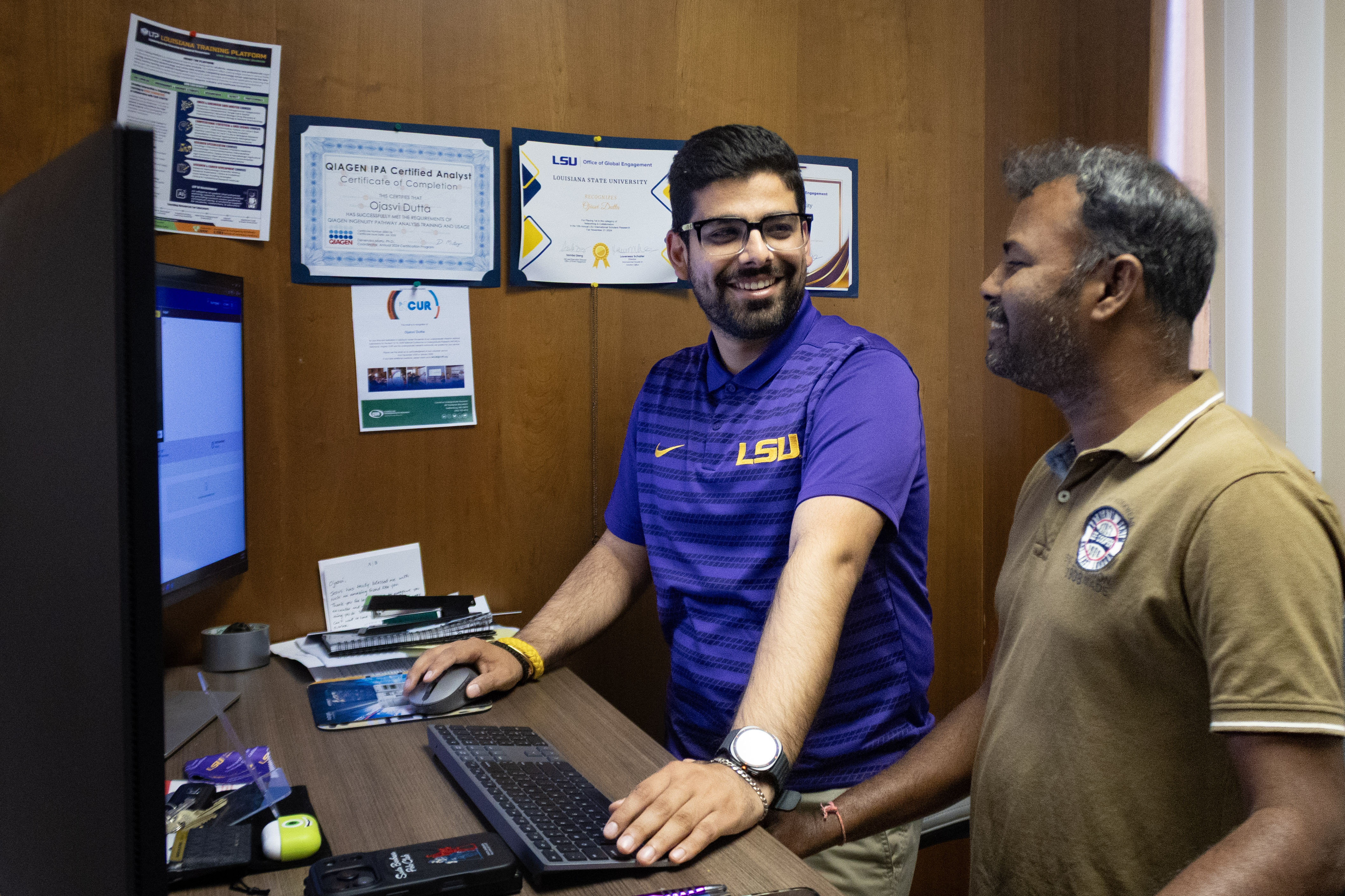
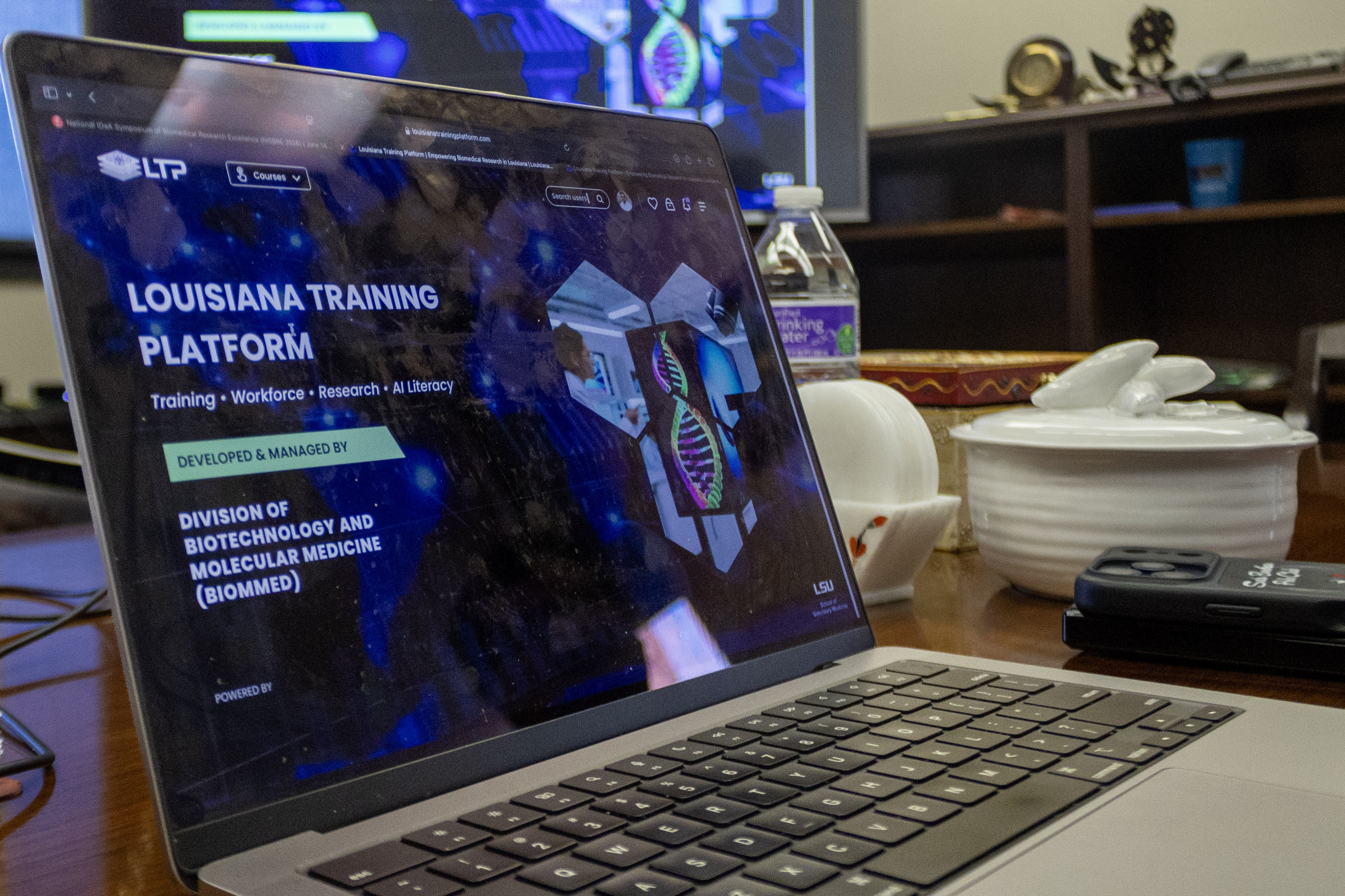
Ojasvi Dutta and Harikrishnan Mohan review quizzes from a course on the Louisiana Training Platform, putting themselves in the students’ shoes to ensure the content is accurate, engaging, and effective. The Louisiana Training Platform is a digital learning hub designed to make complex science education accessible statewide.
To that purpose, researchers at LSU have developed the Louisiana Training Platform (LTP), a centralized, research-driven digital learning hub designed to make complex science education accessible statewide.
Developed by BioMMeD and powered by the Louisiana Biomedical Research Network (LBRN), LTP reflects a collaborative effort to expand access to cutting-edge bioinformatics training across Louisiana and beyond.
“Overall, the goal is to make LTP not just a training platform, but a comprehensive ecosystem for STEM education, workforce development, and research readiness,” said Ojasvi Dutta, assistant director of BioMMeD and program manager for LTP and LBRN.
About the LBRN: The Louisiana Biomedical Research Network (LBRN) was established in September 2001 with funding from the National Institutes of Health (NIH) through the National Institute of General Medical Sciences (NIGMS). The LBRN is leading the growing push to strengthen biomedical research capacity across the state with a primary focus in data science, artificial intelligence and bioinformatics. LSU’s Kousoulas serves as principal investigator and program director for the LBRN, which was recently funded by NIH for the next five years ($20.5 million).
A Statewide Digital Learning Hub
Developed within BioMMeD, the LTP offers more than 25 courses (and growing) across fields such as genomics, artificial intelligence, precision medicine, drug discovery, and agriculture
“An important feature of LTP is that it provides specialized training to teachers, enabling them to teach courses that otherwise may not be fully prepared to teach,” Kousoulas said.
Courses are structured to guide learners from foundational knowledge to hands-on, real-world applications. Students can engage through live, recorded, or hybrid formats, while benefiting from built-in assessments, grade tracking, peer learning communities, and AI-powered academic support.
Importantly, the platform is available at no cost to Louisiana institutions, allowing campuses with fewer resources to offer cutting-edge coursework without needing additional faculty expertise.
Launched in July 2025, the LTP is already being used by thousands of students across more than 40 campuses statewide, including 10 primary partner institutions within the LBRN network.
In collaboration with LSU’s Gordon A. Cain Center for STEM Literacy, the platform extends into high schools—broadening access to STEM education and helping build early interest in science careers.
Craig Schwartzenberg is a teacher at STEM Magnet Academy of Pointe Coupee and director of technology for the parish school district. He said he has seen clear growth in student engagement, confidence, and interest in STEM pathways since implementing the LTP’s Introduction to Computational Thinking (Python) course.
“Students who previously saw themselves as 'not good at math or technology' now successfully debug code, explain their reasoning, and ask for additional opportunities to explore programming and related STEM courses,” he said.
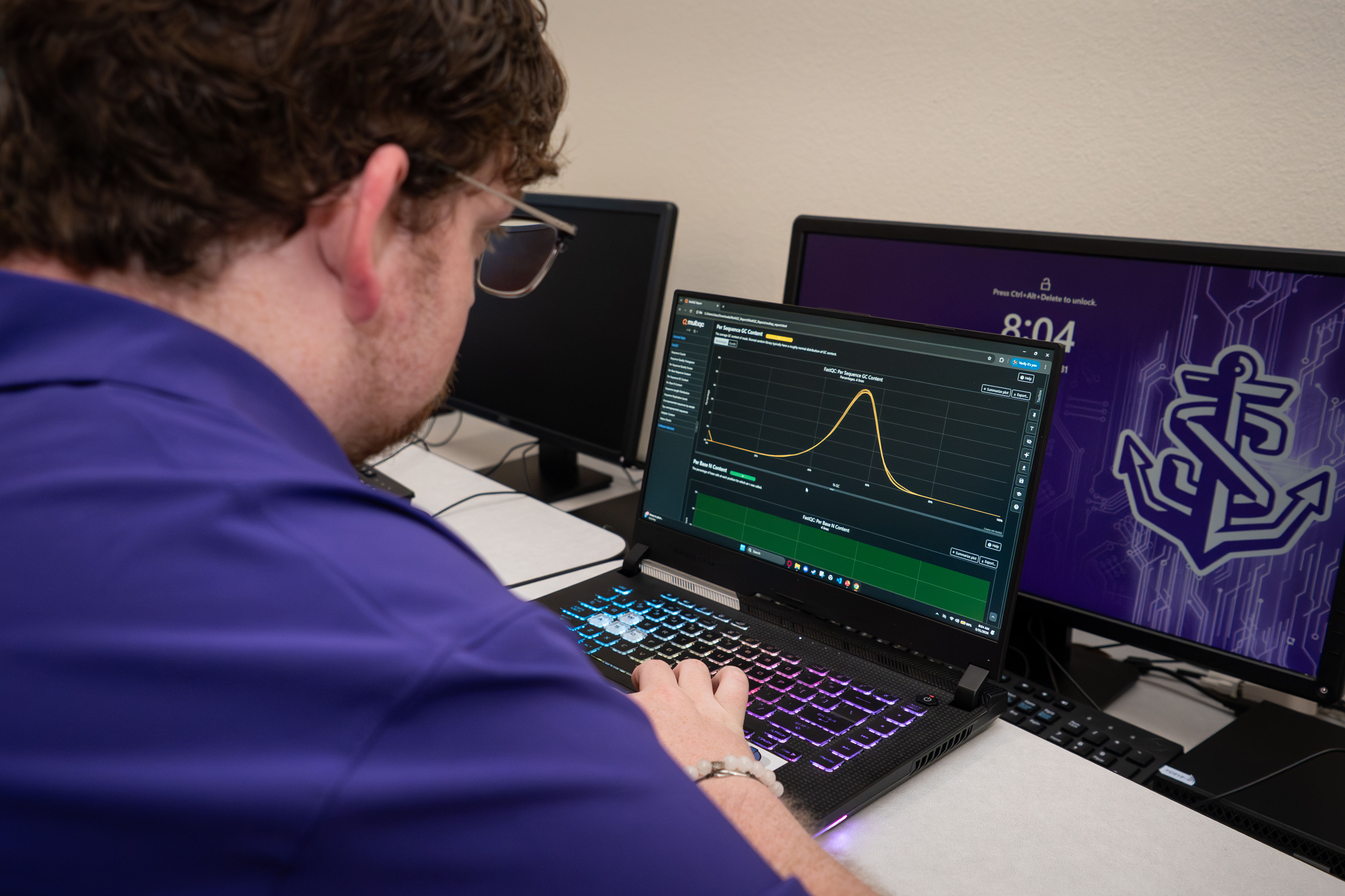
LSU-Shreveport graduate student Harold Quinn Jr. explores course materials on the LTP’s Introduction to Bioinformatics course.

STEM Magnet Academy of Pointe Coupee high school students engage with the LTP.

STEM Magnet Academy of Pointe Coupee high school students engage with the LTP.

STEM Magnet Academy of Pointe Coupee high school students engage with the LTP.
Accessible, Hands-On Learning for Every Student
Getting started on the Louisiana Training Platform is simple and designed to remove barriers to advanced STEM learning.
Students can log in using their academic email, or instructors can quickly enroll entire classes, making it easy to bring cutting-edge coursework into any college or high school classroom.
Benjamin Carver, head of technology and teacher at the New Orleans Military and Maritime Academy, said the LTP platform was easy to integrate into the classroom.
“LTP has allowed our students to have access to all materials at the touch of their fingertips,” he said. “I know that when they get to that lesson, the materials have been updated to reflect the most up-to-date information for the curriculum.”
Each course combines guided instruction with opportunities to practice, assisted by such features as:
- AI Assistant: This feature supports students in real time by answering questions and clarifying concepts.
- Integrated Coding Environment (R & Python): Students can write, test, and submit code directly within the platform, eliminating the need for external tools and allowing instructors to review work in one place.
- Assessment & Review System: Both hands-on assignments and traditional quizzes are offered, with streamlined submission and review workflows, efficient for both students and instructors.
- Collaborative Learning: Students often work in groups within the platform, helping each other troubleshoot and learn while increasing engagement.
As they progress, students complete hands-on assignments, structured assessments, and quizzes designed to reinforce learning. They also have the option to install tools locally for continued use beyond the course, helping extend learning into their academic journey.
At the end of the course, students complete a final assessment or project and receive certification or academic credit, depending on institutional integration, creating clear pathways into careers in biotechnology, healthcare, and data science.
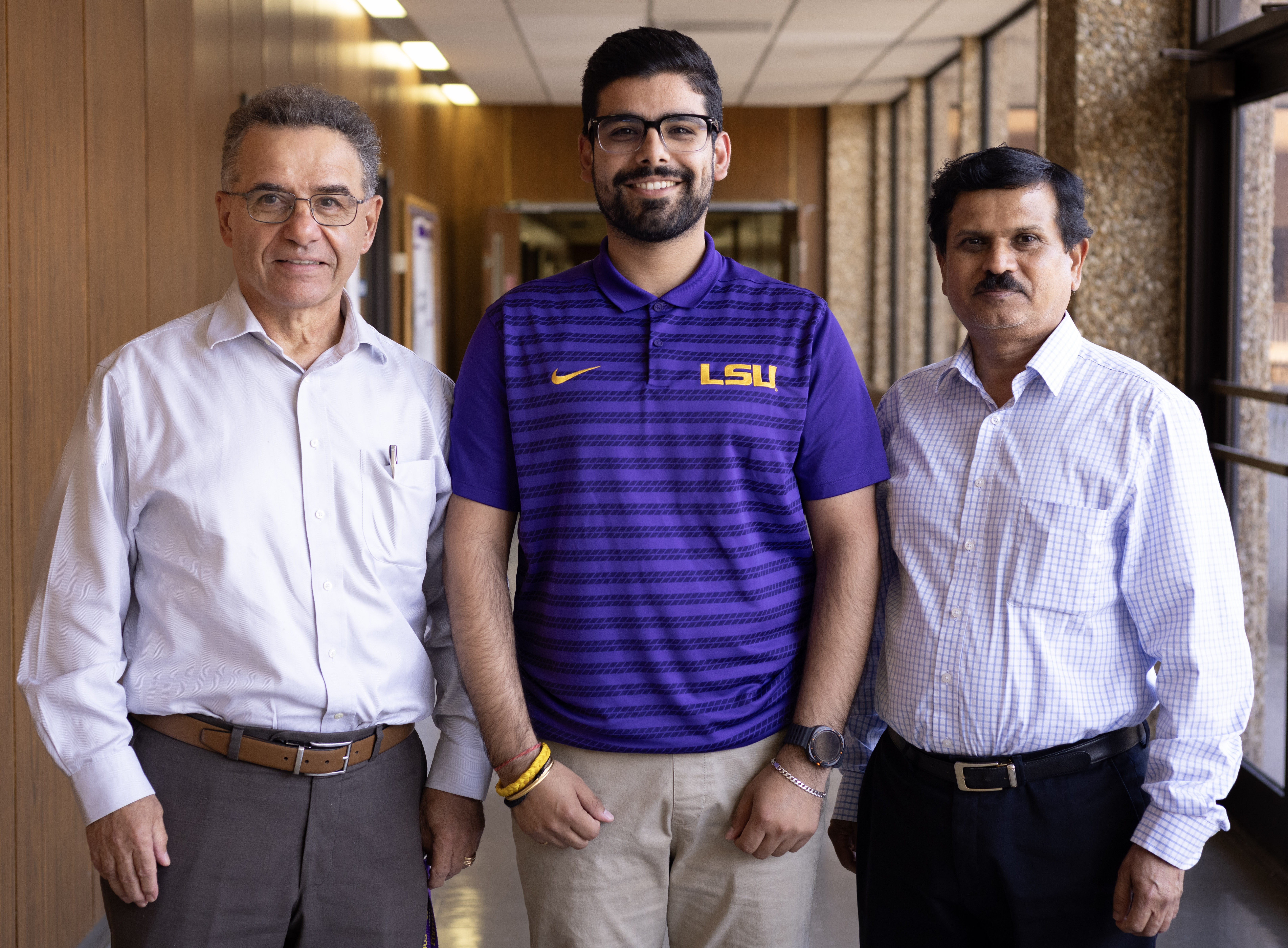
Developed by BioMMeD and powered by LBRN, LTP reflects a collaborative effort to expand access to cutting-edge bioinformatics training across Louisiana and beyond. Leading the effort, from left, are Konstantin Kousoulas, Ojasvi Dutta, and Seetharama Jois, program coordinator, LBRN, and LSU VetMed professor.
Building Louisiana’s Biomedical Workforce
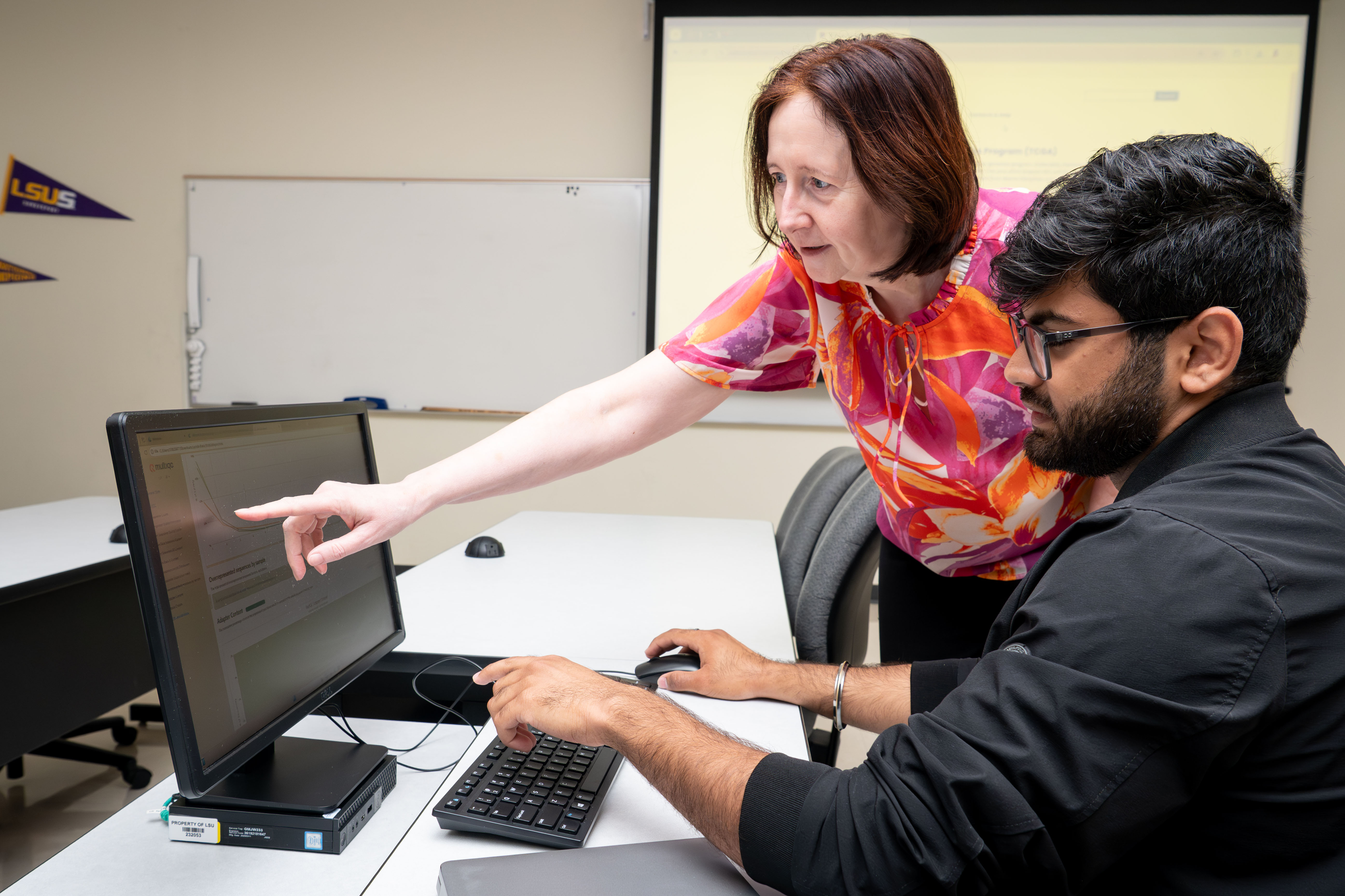
Urska Cvek, professor of computer science at LSU-Shreveport, works with graduate student Jyotish Batra on quality control related to LTP's Introduction to Bioinformatics course.
LTP is already transforming how science education is delivered across the state. Early adoption numbers signal strong momentum, with more than 2,000 college students and 5,000 high school students already engaged.
Schwartzenberg said providing students with early access to rigorous STEM learning is key, particularly in rural or under-resourced communities.
Before LTP, his school struggled to offer advanced STEM and computational thinking opportunities to ninth graders due to a lack of a coherent curriculum, classroom resources, and time to design rigorous projects from scratch. Today, the school can introduce computational thinking to those students through structured units, teacher resources, and online activities, all provided by LTP.
“By giving students authentic experiences in computational thinking and programming at the start of high school, we help them see STEM and computer science as realistic, attainable futures and better prepare them for advanced coursework, dual-enrollment opportunities, and high-demand careers,” Schwartzenberg said.
Adoption has grown steadily across Louisiana, Dutta said, and feedback has been positive. Students appreciate the platform's hands-on, interactive nature, especially the ability to practice coding and apply concepts directly.
“Instructors and facilitators value how LTP reduces administrative burden, particularly with grading, tracking, and course management, while still maintaining high-quality instruction,” he said.
And the team is working on dual enrollment pathways with LSU, in collaboration with the Cain Center, to further bridge high school and undergraduate education.
A Platform Destined to Expand
As it performs its primary duty of educating Louisiana students, Kousoulas said, LTP is now evolving into a major platform for other initiatives, including supporting the LSU-wide effort to pursue an NCI Cancer designation, led by LSUHSC-NO, and promoting entrepreneurship and workforce development.
Looking ahead, the platform has the potential to scale beyond Louisiana, serving as a national model for accessible, collaborative STEM education, while continuing to fuel innovation and workforce development at home.
“We intend to attract significant funding from the federal government (NIH, NSF, USDA, etc.) as well as major IT companies to expand our outreach worldwide,” Kousoulas said.
“We aspire to become the major platform for education in these disciplines as well as in STEM disciplines through collaboration with the Cain Center.”