

LSU’s Tim Slack to Bring Louisiana Perspective to National Rural Research Leadership Role
June 10, 2026
Why are some small towns growing while others are shrinking? Why is it harder to access health care, education, and job opportunities in many rural communities? These are some of the questions researchers like Tim Slack seek to answer.
Slack, an LSU sociology professor, has spent his career studying the issues rural Americans face every day. Now, through his election as president of the Rural Sociological Society (RSS), he has the opportunity to help shape conversations about those challenges on a national level while bringing attention to Louisiana's rural communities.
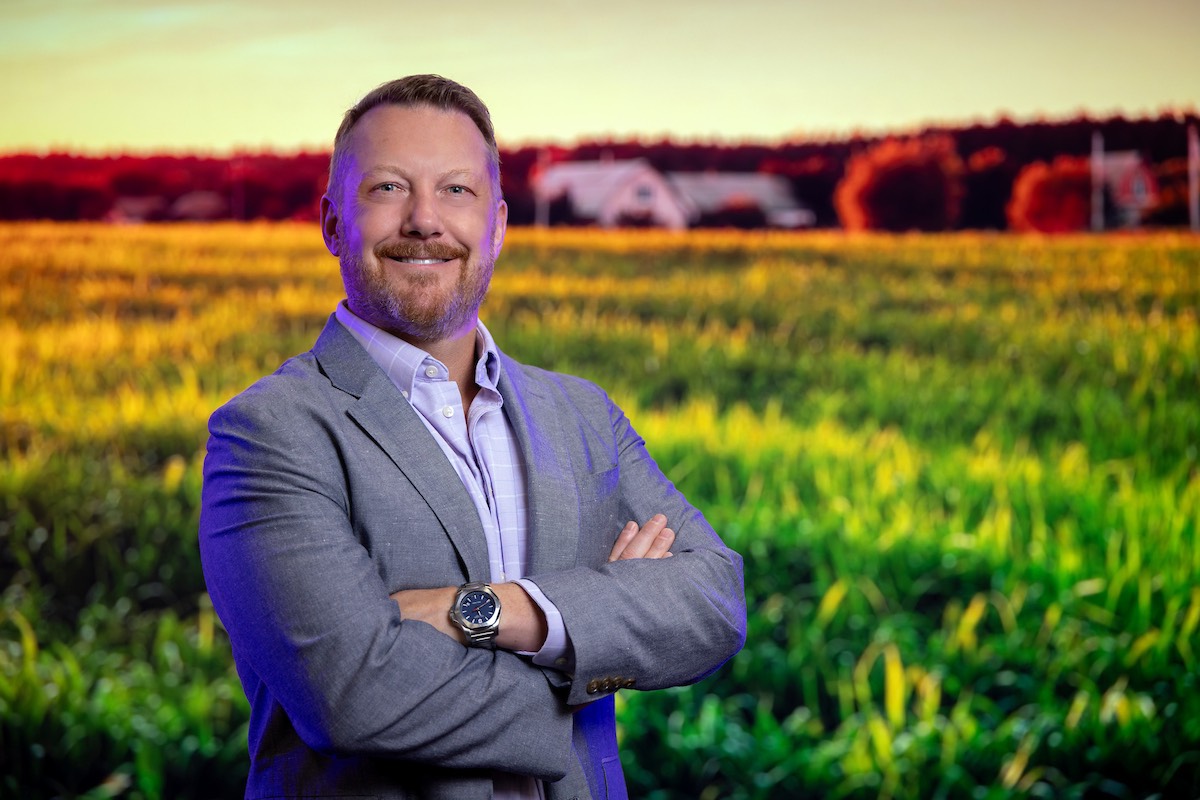
The organization studies the social, economic, and demographic issues impacting rural communities and helps inform policy and decision-making across the country. Slack is the third LSU faculty member to hold the position.
As president, his work seeks to challenge common misconceptions about rural communities, highlight what makes Louisiana's rural areas unique, and create more visibility for LSU through research access and opportunity.
What does your research and outreach work in rural areas actually look like on the ground?
My research is generally focused on social, economic, and demographic change and how these processes compare across rural and urban contexts. This is important because broad trends often play out differently in rural and urban areas. Much of my work is conducted at the national level in the United States, using spatial units of analysis like counties/parishes. But I have also done a fair amount of regionally focused research (e.g., the South, the Gulf Coast). I typically don’t work directly with on-the-ground community-based efforts. But my research is often called upon to contextualize the challenges and opportunities people are facing in their communities.
I think the overarching theme for rural areas is that misconceptions about rural America run deep. Rural America is no model of stability or a holdover of “the way things used to be.” Social, economic, and demographic change abounds. And rural America is not a monolith; it is socially and regionally diverse. In fact, there are many rural Americas.
What does this work mean to an everyday person, but also for a family living in a rural community?
My research provides empirical contextualization and often validation for the challenges that everyday people and rural families are facing in America today. Whether that is making a living and paying the bills, raising kids with the hope that they will be healthy, happy, and successful, or deciding to make a life and build a family in a rural community versus moving elsewhere (perhaps a city) to do so.
How can your election to the Rural Sociological Society help further this work and potentially impact Louisiana?
Being elected president of the Rural Sociological Society is a real honor. The RSS is the premier social science association in the United States dedicated to promoting the generation, application, and dissemination of sociological knowledge related to rural people and places. Being elected president means the folks working in this professional space believe I can provide the vision and leadership necessary to advance the organization’s mission. I feel honored and humbled to be entrusted with this responsibility.
I am the third professor from LSU to be elected president of RSS. The first was T. Lynn Smith, who served from 1941 to 1942. The second was Alvin Bertrand, who served from 1967 to 1968. Dr. Bertrand was a Boyd Professor—the highest, most prestigious distinction awarded by the Board of Supervisors to a member of the LSU faculty. Both guys were heavy hitters as scholars, so it’s special to be in that company.
I am excited by the prospect of elevating research on rural people and places, and the unique challenges and opportunities we have in the rural Deep South and Louisiana.
What does this leadership position allow you to do or advocate for moving forward?
This leadership position gives me a stage to advocate for the special challenges and opportunities facing rural people and places. It also puts me in a position to advocate for a robust federal funding and data infrastructure to facilitate research on these issues in the United States. This capacity has been under political pressure in recent years. But we can’t deal with social issues we can’t identify or measure progress on. Pragmatic, evidence-based decision making is a public good.
What types of rural communities exist across Louisiana, and how does Louisiana compare to the rest of the nation when it comes to rural issues and opportunities?
Wow, this is a big question. I’ll do my best to be brief. One of the things that is really cool about Louisiana is that despite having a relatively small geography and population, the state is home to tremendous diversity. We have rural communities that are organized around agriculture, timber, fishing, mining (oil and gas), manufacturing, and tourism. We have some that are aging and depopulating, others that are growing, and still others that are being absorbed by the expansion of neighboring cities (what some call sprawl). Culturally, we have great diversity between the rural north, south, east, and west of our state. We have the rural Cajun culture. And rural Black populations are more common in our state than you find almost anywhere else in the country. We have big challenges and big opportunities. Rural Louisiana is truly fascinating.