
Zakiya Wilson-Kennedy
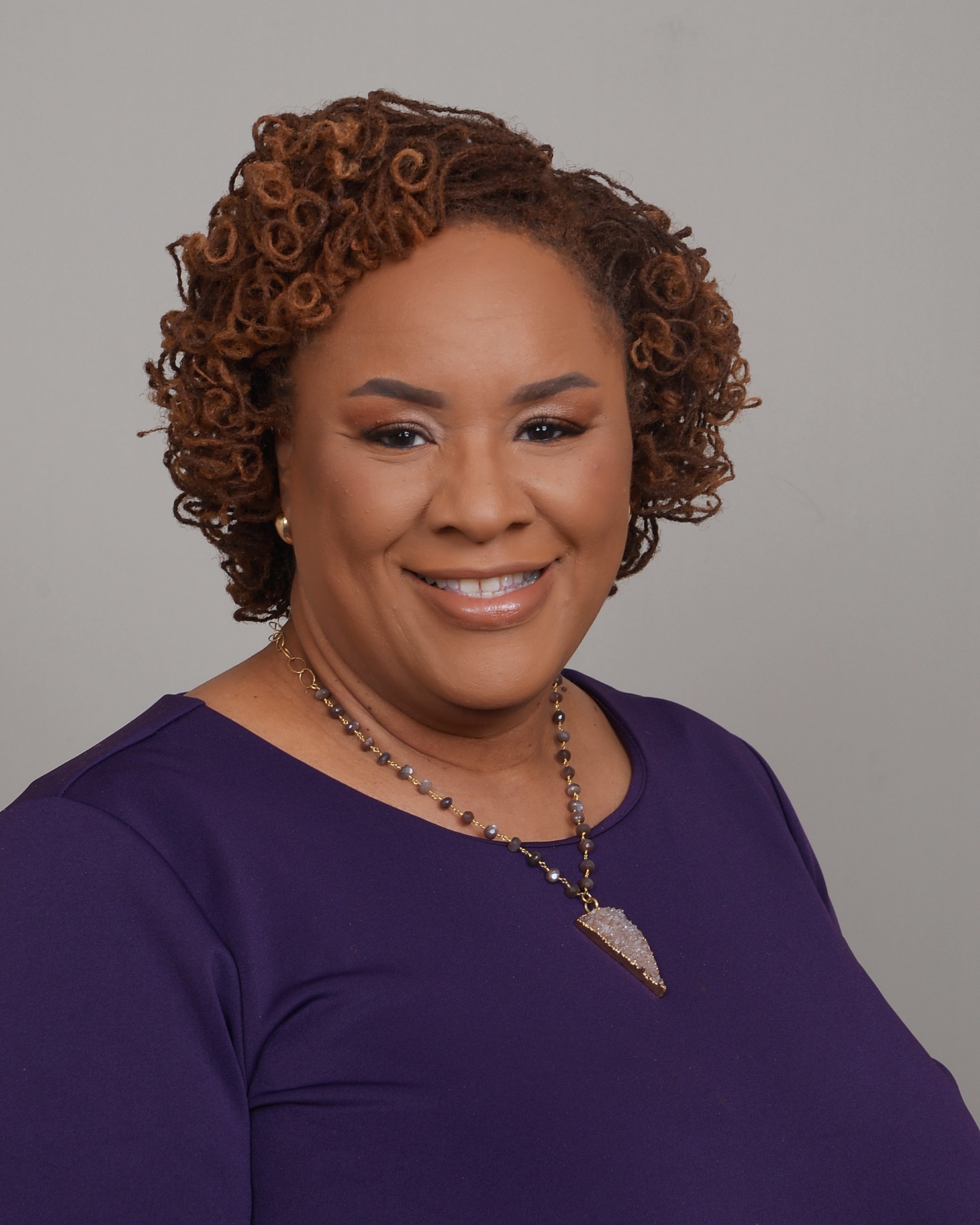
Ron and Dr. Mary Neal Distinguished Associate Professor of Chemistry Education
Associate Dean of Academic Innovation and Engagement in the College of Science
|
B.S.: Jackson State University
Ph.D.: Louisiana State University
|
| Chemistry Office: 414 Choppin Hall |
| E-mail: zwilson@lsu.edu |
About Dr. Wilson-Kennedy
Dr. Zakiya S. Wilson-Kennedy is the Ron and Dr. Mary Neal Distinguished Associate Professor of Chemistry Education and Associate Dean for Academic Innovation and Engagement in the LSU College of Science. She earned a bachelor’s degree in chemistry, cum laude, from Jackson State University and a Ph.D. in inorganic chemistry from Louisiana State University. Her postdoctoral research at LSU examined transition-metal complexes using computational chemistry and density functional theory.
Her academic career has developed across research, teaching, program leadership, and institutional administration. At LSU and North Carolina A&T State University, she has led and contributed to initiatives designed to improve student persistence, strengthen mentoring, expand research opportunities, support faculty development, and broaden participation in STEM education and careers.
Her scholarship now centers on the experiences of students and faculty in STEM learning environments. She studies how motivation, belonging, identity, cultural wealth, mentoring, pedagogy, and institutional context influence students’ decisions to persist in or leave STEM pathways. Her approach is strengths-based: rather than locating the problem in students, she asks how educational systems can recognize students’ strengths and become more responsive to their experiences and goals.
Dr. Wilson-Kennedy is an elected fellow of several professional societies:
- Fellow of the American Association for the Advancement of Science (AAAS)
- Fellow of the American Chemical Society (ACS)
- Fellow of the National Organization for the Professional Advancement of Black Chemists and Chemical Engineers (NOBCChE).
Her honors also include the NOBCChE Winifred Burks-Houck Award, the NOBCChE Henry C. McBay Outstanding Educator Award, the ACS Stanley C. Israel Regional Award for Advancing Diversity in the Chemical Sciences, and recognition connected to the Presidential Award for Excellence in Science, Mathematics and Engineering Mentoring (PAESMEM).
Research Overview
Dr. Wilson-Kennedy’s research asks a central question: What conditions help students and scholars persist, develop confidence, and find belonging in STEM?
Her work examines STEM education as an ecosystem. Students’ experiences are shaped by classroom practices, gateway courses, peer and faculty relationships, institutional structures, social and cultural contexts, and their own identities, aspirations, and sources of strength. By studying these factors together, her research seeks to move beyond deficit explanations and generate practical, evidence-informed strategies for improving STEM education.
Current Research Interest
A current research interest examines how generative artificial intelligence is reshaping metacognition, conceptual learning, and academic judgment in chemistry and other STEM learning environments. This work asks not simply whether students use AI, but how they use it: whether AI supports planning, monitoring, verification, explanation, and transfer—or substitutes for the cognitive work through which understanding develops.
The program draws on research on self-regulated learning, constructivism, response-shift measurement, and technology adoption. It combines classroom-based mixed methods, student reflections and learning artifacts, surveys, focus groups, and course-level outcomes to study student and instructor practices. An important goal is to develop practical pedagogical frameworks and faculty-development approaches that help students use AI as a tool for reasoning while preserving authorship, disciplinary judgment, and responsibility for learning.
STEM Persistence at Critical Transitions
This line of research examines why students enter, remain in, or leave STEM pathways, with particular attention to the first years of undergraduate study and other consequential transitions. It considers how preparation, motivation, academic experiences, relationships, recognition, and institutional context interact in students’ decision-making.
Chemistry Learning and Gateway-Course Success
This work studies how students learn chemistry, how they develop scientific reasoning and identity, and how course design, assessment, active learning, and learning environments influence achievement and continuation in STEM.
Metacognition and AI-Mediated Chemistry Learning
This line of research examines how students and instructors use generative AI in chemistry learning and how those uses relate to self-regulated learning, conceptual understanding, and academic judgment. Current work includes the study of AI purpose and verification behaviors in a first-year science and mathematics seminar; the development of the READ framework—Role, Explain, Ask for Clarification, and Demonstrate—to structure student–AI dialogue; and the design of faculty-development approaches for thoughtful, evidence-informed AI integration.
Mentoring and Professional Development
This program designs and evaluates mentoring structures that support undergraduate and graduate students, postdoctoral scholars, faculty members, and emerging academic leaders. It examines how mentoring can build confidence, professional knowledge, agency, and access to meaningful opportunities.
Institutional Learning and Academic Change
This work investigates how departments, colleges, universities, and professional societies use evidence, leadership, and collaboration to improve teaching, mentoring, faculty development, and student outcomes.
Research Questions
Across these areas, Dr. Wilson-Kennedy asks:
- What features of STEM learning environments support persistence and achievement?
- How do students interpret their experiences in gateway chemistry and mathematics courses?
- Which mentoring structures support academic and professional development?
- How can faculty and academic leaders translate evidence into sustainable practice?
- How do students’ purposes for using AI and their verification practices relate to changes in metacognition, conceptual learning, and gateway-course outcomes?
Research Impact
Across her research and sponsored projects, Dr. Wilson-Kennedy has contributed to programs supporting undergraduate and graduate students, international research experiences, faculty development, effective teaching, and the preparation of a larger and more capable STEM workforce. Her work connects research with practice through peer-reviewed publications, professional workshops, conference presentations, mentoring programs, and collaborations across research universities, institutions serving broad student populations, professional societies, and community partners. She works especially well with leaders seeking practical approaches that can be adapted to their department, college, or institutional context.
Selected Impact
-
- More than $30 million in externally funded projects supported through federal agencies and philanthropic organizations.
- Design and scaling of SCI 1001, a first-year science and mathematics course implemented across approximately 40 sections and serving about 1,000 students each fall.
- Development of mentoring, writing, leadership, and professional-development experiences for undergraduate students, graduate students, postdoctoral scholars, and faculty.
- Translation of research into courses, workshops, institutional initiatives, scholarly publications, and national professional conversations.
Teaching Philosophy
Teaching chemistry means helping students learn both the discipline and how to participate in a community of scientists. Dr. Wilson-Kennedy’s teaching combines clear expectations, active engagement, purposeful practice, reflection, and structured support. She designs learning experiences that help students understand chemical concepts, develop problem-solving skills, monitor their own learning, and connect coursework to future academic and professional goals.
Her teaching is grounded in the belief that rigor and support are mutually reinforcing. Students learn best when they are challenged, supported, recognized as capable contributors, and given meaningful opportunities to connect their experiences and aspirations to the work of science.
Teaching Interests
- Chemistry education research
- General chemistry and gateway STEM courses
- Active learning and student engagement at scale
- Metacognition and self-regulated learning
- Student-centered and accessible teaching
- Curriculum design and course redesign
- Learning environments that support confidence, belonging, and persistence
- Evidence-informed assessment and feedback
Teaching and Curriculum Leadership
At LSU, Dr. Wilson-Kennedy has helped develop and scale courses and learning experiences designed to support students as they enter and progress through STEM. Her work has included the design of first-year science and mathematics experiences, mentoring and research preparation courses, general chemistry support, faculty and peer-mentor training, and instructional materials for student success.
She has also contributed to conversations about teaching large-enrollment chemistry courses, active learning at scale, curriculum development for gateway courses, sustainable assessment and feedback, and the responsible use of emerging technologies to support learning and course design.
Teaching in practice
Examples of her teaching and curriculum work include:
- Designing first-year experiences that introduce students to scientific learning, academic skills, career exploration, and disciplinary community.
- Developing structured support for gateway chemistry and mathematics courses.
- Using active learning, metacognition, reflection, and feedback to make student thinking visible.
- Preparing instructors and peer mentors to support learning at scale.
- Connecting course design with assessment, persistence, and longer-term student outcomes.
Teaching Statement Excerpt
My goal is to create learning environments in which students can see themselves as capable learners and developing scientists. I want students to leave a course with more than a set of chemical facts. I want them to understand how to approach complex problems, ask productive questions, use feedback, reflect on their learning, and recognize that they belong in the scientific community.
Mentoring Philosophy
Mentoring is a professional, working alliance that supports personal and professional growth over time. Effective mentoring combines career guidance, skill development, sponsorship, role modeling, encouragement, accountability, and honest communication.
Dr. Wilson-Kennedy approaches mentoring as a developmental partnership. She works with mentees to clarify goals, identify obstacles, build strategies, seek feedback, and develop the confidence and agency needed to navigate academic and professional environments. She also emphasizes that mentoring should be structured: expectations, communication practices, milestones, and measures of progress should be made visible rather than left to chance.
Mentoring in Practice
Her mentoring and professional-development activities have included:
- Undergraduate and graduate mentoring in STEM
- Research and professional development programs
- Mentoring workshops for graduate students and postdoctoral scholars
- Writing workshops for graduate students and faculty
- Faculty development in effective teaching and mentoring
- Leadership learning for students preparing for service and academic careers
- Career preparation, including CV development, job applications, research presentations, and academic career planning
- Mentor training for faculty, graduate students, and program staff
What Mentees Can Expect
Mentees should expect a collaborative process that includes goal setting, preparation for meetings, regular communication, feedback, reflection, and follow-through. A mentoring relationship may focus on research, teaching, graduate school, professional identity, academic writing, leadership, or career planning. The work begins by identifying what the mentee wants to accomplish and what support will make progress possible.
For Programs and Institutions
Dr. Wilson-Kennedy also works with programs and institutions that want to strengthen mentoring beyond one-to-one relationships. Possible areas include mentor training, mentoring curricula, graduate and postdoctoral development, writing programs, leadership learning, evaluation, and the design of sustainable support structures.
Leadership and Engagement
Academic leadership
Dr. Wilson-Kennedy’s leadership connects academic innovation with student and faculty success. In her role as Associate Dean for Academic Innovation and Engagement, she supports initiatives that strengthen teaching and learning, expand professional development, build strong academic cultures, and create more effective pathways through STEM education.
Her leadership has included work in student and faculty success, access and belonging, faculty development, undergraduate education, graduate education, mentoring, program evaluation, strategic planning, sponsored projects, institutional change, and community engagement. She has collaborated with departments, colleges, university offices, professional societies, government agencies, philanthropic organizations, and external partners to develop sustainable approaches to academic excellence and student success.
For Faculty and Academic Leaders
Dr. Wilson-Kennedy works with faculty, department chairs, deans, centers for teaching and learning, and academic leadership teams on:
- Faculty development in teaching, mentoring, and academic writing
- Gateway-course and curriculum improvement
- Mentoring-system design and mentor preparation
- Student-success strategy and program evaluation
- Institutional learning and sustainable academic change
- Research-informed workshops, retreats, and invited talks
- Engagements can be shaped as a keynote, workshop, consultation, research collaboration, or longer-term institutional partnership
Engagement beyond LSU
Dr. Wilson-Kennedy has served as a speaker, workshop facilitator, editor, reviewer, consultant, committee member, and organizer for national and international STEM education initiatives. Her engagement often focuses on:
- Learning environments where all students can thrive
- Student success and belonging in chemistry education
- Mentoring students and faculty across backgrounds and career stages
- Supporting women and faculty of color in STEM
- Faculty motivation for scholarly teaching
- Institutional change and sustainable STEM initiatives
- Broadening participation in undergraduate and graduate
- STEM education
Speaking topics
- Building rigorous, welcoming, and effective chemistry learning environments
- High-impact practices that support STEM persistence
- Mentoring for student and faculty success
- From deficit narratives to asset-based STEM education
- Belonging, identity, and motivation in STEM pathways
- Designing sustainable institutional change
- Supporting women and faculty of color in STEM
- Teaching large-enrollment gateway chemistry courses
Selected Publications
The publications below represent several connected strands of scholarship: chemistry learning, STEM persistence, mentoring, institutional change, and the development of stronger academic environments. A complete, searchable list should be linked through the current CV and scholarly profiles.
Books and edited volumes
- Wilson-Kennedy, Z. S., Byrd, G. S., Kennedy, E., and Frierson, H., editors. Broadening Participation in STEM: Effective Methods, Practices, and Programs. Emerald Publishing, 2019.
- Winfield, L., Wilson-Kennedy, Z., Thomas, G., and Watkins, L., editors. Growing Diverse STEM Communities: Methodology, Impact, and Evidence. ACS Symposium Series, 2019.
Selected journal articles and chapters
- Davis, R., Winfield, L., Spivak, D., and Wilson-Kennedy, Z. “Role of International Research Experiences in the Development of Women of Color in Chemistry.” Journal of Chemical Education, 2022, 99(1), 104–112.
- Davis, R., Wilson-Kennedy, Z., and Spivak, D. “International Research Experiences in the Development of Minority Scientists.” Frontiers in Education, 2021, 6.
- Wilson-Kennedy, Z. S., Payton-Stewart, F., and Winfield, L. “Toward Intentional Diversity, Equity, and Respect in Chemistry Research and Practice.” Journal of Chemical Education, 2020, 97(8), 2041–2044.
- Wilson-Kennedy, Z. S., Kanipes, M. I., and Byrd, G. S. “Transforming STEM Education through Collaborative Leadership at Historically Black Colleges and Universities.” CBE—Life Sciences Education, 2018, 17(3), es13.
- Wilson, Z. S., McGuire, S. Y., Limbach, P. A., Doyle, M. P., Marzilli, L. G., and Warner, I. M. “Diversifying Science, Technology, Engineering, and Mathematics (STEM): An Inquiry into Successful Approaches in Chemistry.” Journal of Chemical Education, 2014, 91(11), 1860–1866.
- Wilson, Z. S., Iyengar, S. S., Pang, S. S., Warner, I. M., and Luces, C. A. “Increasing Access for Economically Disadvantaged Students: The NSF/CSEM & S-STEM Programs at Louisiana State University.” Journal of Science Education and Technology, 2012, 21, 581–587.
- Wilson, Z. S., et al. “Hierarchical Mentoring: A Transformative Strategy for Improving Diversity and Retention in Undergraduate STEM Disciplines.” Journal of Science Education and Technology, 2012, 21, 148–156.
- Wilson, Z. S., Stanley, G. G., and Vicic, D. A. “To Bend or Not to Bend: Electronic Structural Analysis of Linear versus Bent M−H−M Interactions in Dinickel Bis(dialkylphosphino)methane Complexes.” Inorganic Chemistry, 2010, 49(12), 5385–5392.
- Garcia Ramos, J., & Wilson-Kennedy, Z. (2024, October). Promoting equity and addressing concerns in teaching and learning with artificial intelligence. In Frontiers in Education (Vol. 9, p. 1487882). Frontiers.
- Garcia Ramos, J., & Wilson-Kennedy, Z. (2025, August). The use of artificial intelligence in STEM communication-intensive courses and its impact on science identity. In Frontiers in Education (Vol. 10, p. 1644873). Frontiers Media SA.
- Hamza, U., Jones, T., and Wilson-Kennedy, Z. “Structuring Student–AI Interaction in STEM Learning -- The READ Framework.” Pedagogies for Critical Engagement in the AI Era: Thinking Beyond the Output, IGI Global, 2026 in press.
Editorial work
Dr. Wilson-Kennedy has edited and co-edited scholarly volumes on expanding participation and strengthening STEM communities and served as a guest editor for a Journal of Chemical Education special issue on diversity, equity, inclusion, and respect in chemistry education research and practice.